





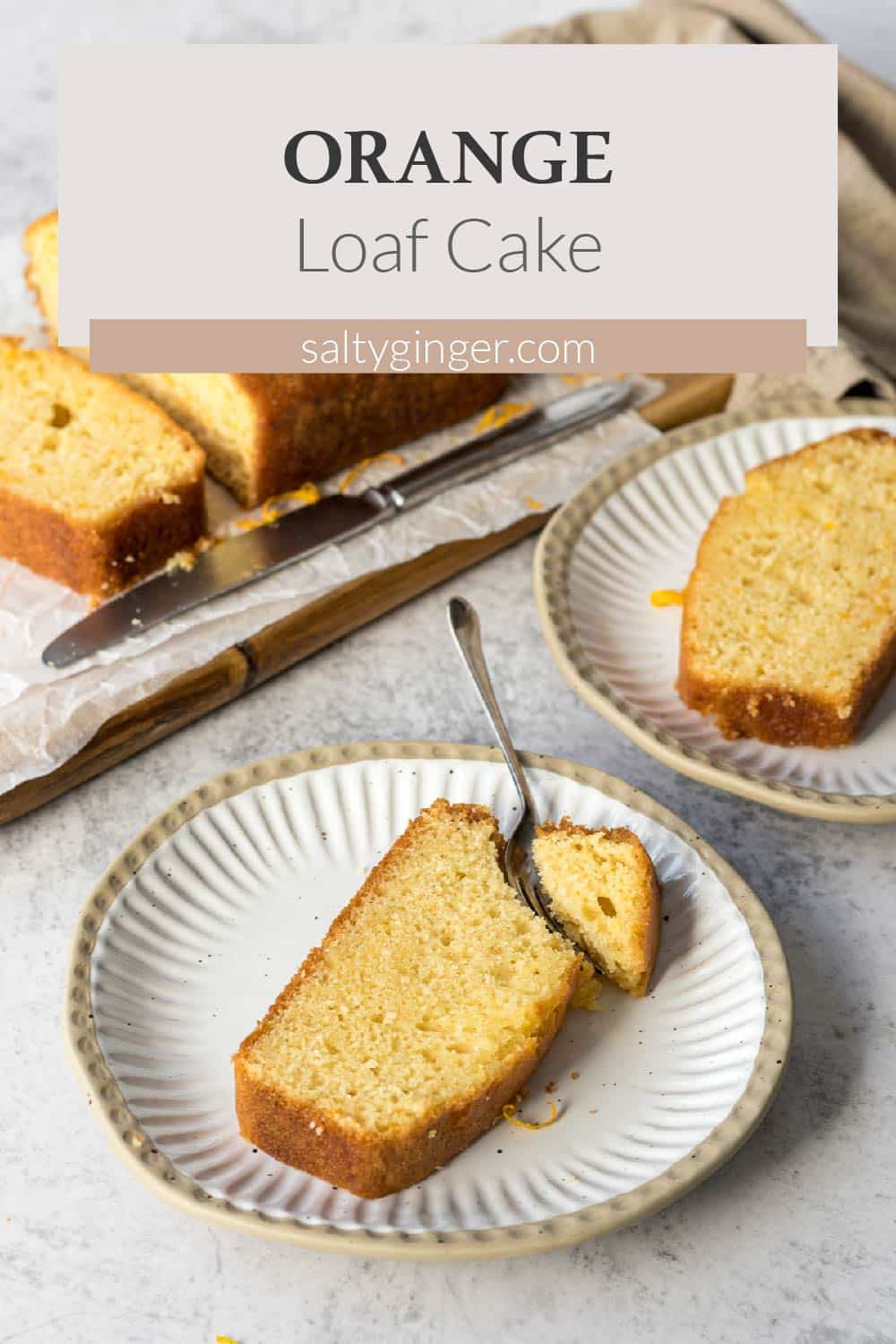
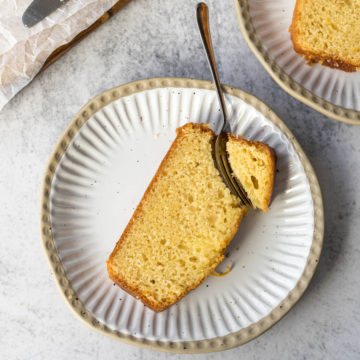
A slice of this quick, easy, and extra-moist orange loaf cake makes the perfect light dessert or lovely addition to brunch or an afternoon coffee break.
Baking a sunny orange drizzle cake in the middle of winter brings me pure joy—from watching the silky yellow batter transform into a delightfully fragrant cake, to tenderly drizzling sweetened orange juice over the warm loaf and watching it soak right in.
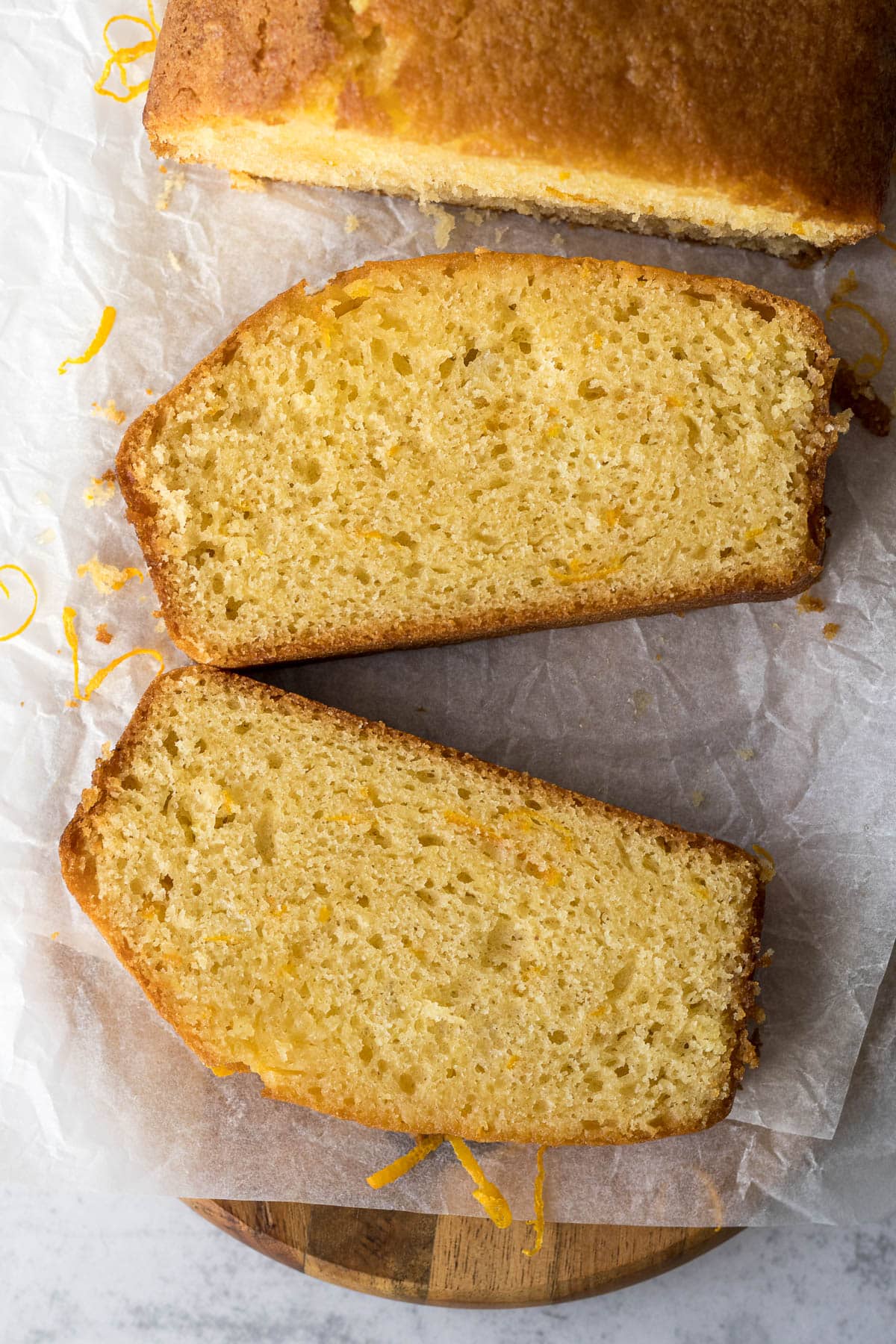
This orange loaf cake is delightfully light and fresh. Reminding me of the oncoming Spring.
Which is exactly what I needed as the days remained grey and rainy here in Christchurch. This cake comes hot on the heels of my other spring-inspired Raspberry and White Chocolate Loaf Cake. The need for light, fresh and fruity bakes is definitely strong at the moment!
For a big sibling version of this cake, check out my delicious chocolate orange cake!
Jump to:
Ingredients
Here are some notes on the ingredients used in this recipe. Please see the recipe card for quantities.
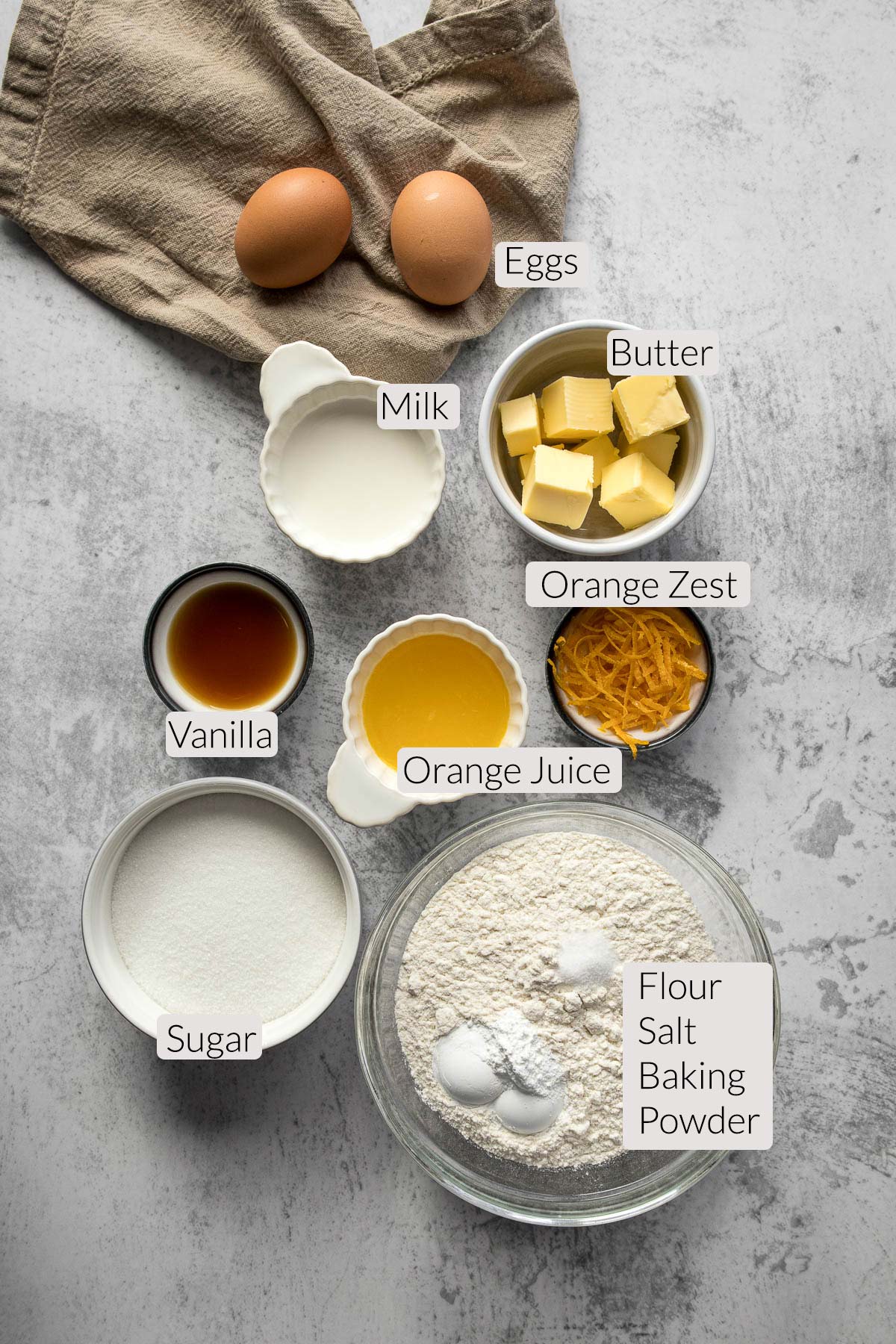
- Granulated or caster sugar to sweeten the cake.
- Eggs bind the cake together.
- The zest of an orange gives a delicious orange flavour.
- Freshly squeezed orange juice gives this cake moisture and a delicious orange flavour.
- Zest and juice of oranges to give a delicious orange flavour.
- Flour - plain, all-purpose, standard grade or cake flour (South Africa).
- Baking powder gives the cake lift and lightness.
- Butter adds a nice, deep, rich flavour to the cake.
- Icing sugar, powdered sugar, or confectioners' sugar for the glaze.
- Vanilla extract adds some dimension to the flavour.
Butter adds flavor, softness, and moisture and sometimes aids in the leavening of baked goods. I use New Zealand butter in my recipes, which has approximately 82% butterfat and can be very yellow (similar to European or Irish butter). Butter cannot be substituted with butter or margarine spreads, but it can be substituted with baking margarine. If using salted butter you can leave out the additional salt in the recipe.
Salt is a crucial ingredient in all baked goods. I use table salt in all my recipes. One teaspoon of table salt equals 1.5 teaspoons of Morton Kosher Salt equals 2 teaspoons of Diamond Crystal.
Test the freshness of your baking powder or baking soda (bicarbonate of soda or bread soda) by placing a small amount in a cup of boiling water. If it bubbles and fizzes, it's good to use!
Room Temperature Ingredients
Use room-temperature ingredients! Using room-temperature ingredients ensures the batter or dough incorporates more easily. Note that room temperature is around 20°C/68°F.
- To bring eggs to room temperature quickly, place them in warm water for about 10 to 15 minutes.
- To bring butter to room temperature quickly, cut the butter into cubes and zap in the microwave at 20% power in 10-second intervals. Or place the cubes in a bowl over warm water (such as with a double boiler) over low heat for 1 minute!
- Milk, buttermilk, and cream can be brought to room temperature by microwaving at 20% power in 10-second intervals. Or on low heat for a minute or two, swirling every 10-15 seconds.
Weighing & Measuring Ingredients
Weighing ingredients with a kitchen scale is more accurate than using measuring cups. All my recipes are developed and tested using grams only.
However, I have activated the metric-to-cup conversions. Simply click on "cups" or "metric" for your preferred measurements. For these conversions, cups are equal to 240 millilitres/8 fluid ounces, tablespoons are 15 milliliters and teaspoons are 5mL.
How to Make an Orange Loaf Cake
This specific cake is based on my Vanilla Tray Bake. I beat the eggs and sugar together before adding the melted butter. I prefer this method, mostly because room-temperature butter can be difficult to obtain in New Zealand, especially during the cooler months.
This cake can be enjoyed by drizzling it with sweetened orange juice or by making an orange glaze.
Step 1
Preheat the oven to 170°C/340F. Grease a loaf tin and set it aside. Melt the butter and let it cool slightly. Zest one of the oranges using a zesting tool or Microplane. Juice all of the oranges.
TIP - Zest the orange before juicing. Before juicing the oranges, roll them on a countertop or chopping board under your palm to make juicing easier. Oranges can be juiced either with a juicer or by hand.
NOTE: A single orange yields about ¼ cup of orange juice, or 60mL.
Step 2
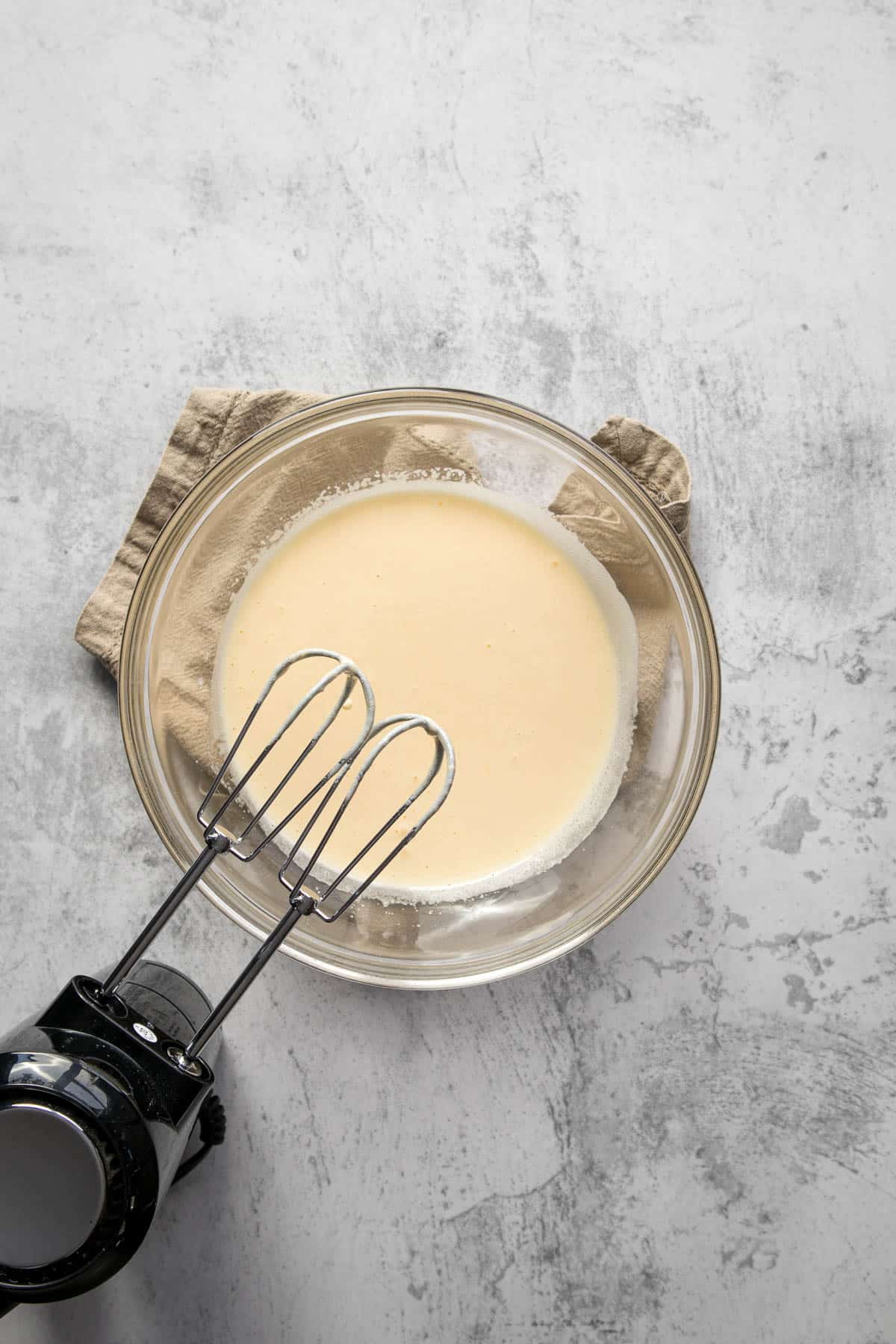
In a large mixing bowl, beat the eggs and sugar until the mixture is light, fluffy, and doubled in size. This will take 3 to 5 minutes using an electric hand mixer or stand mixer.
Step 3
With the mixer running on the lowest setting, pour in the melted butter, vanilla, orange juice, and milk. Mix until well combined.
Step 4
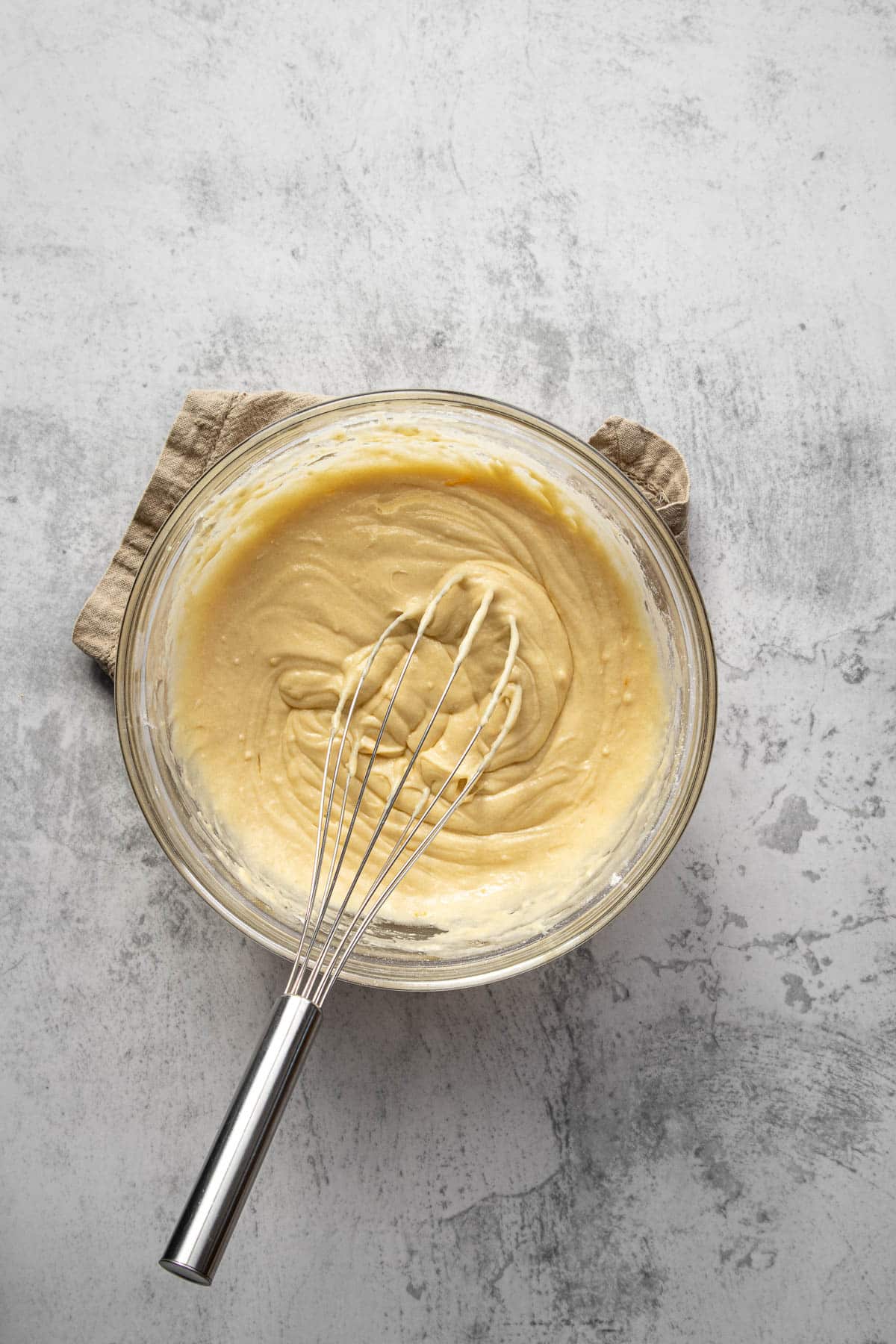
Either whisk together the flour, baking powder, and salt, then add it to the wet ingredients, or sift the dry ingredients over the wet ingredients. Toss in the zest of one of the oranges. Mix until combined.
TIP: Mix the batter until just combined; do not overmix, as this can make the cake tough.
Step 5
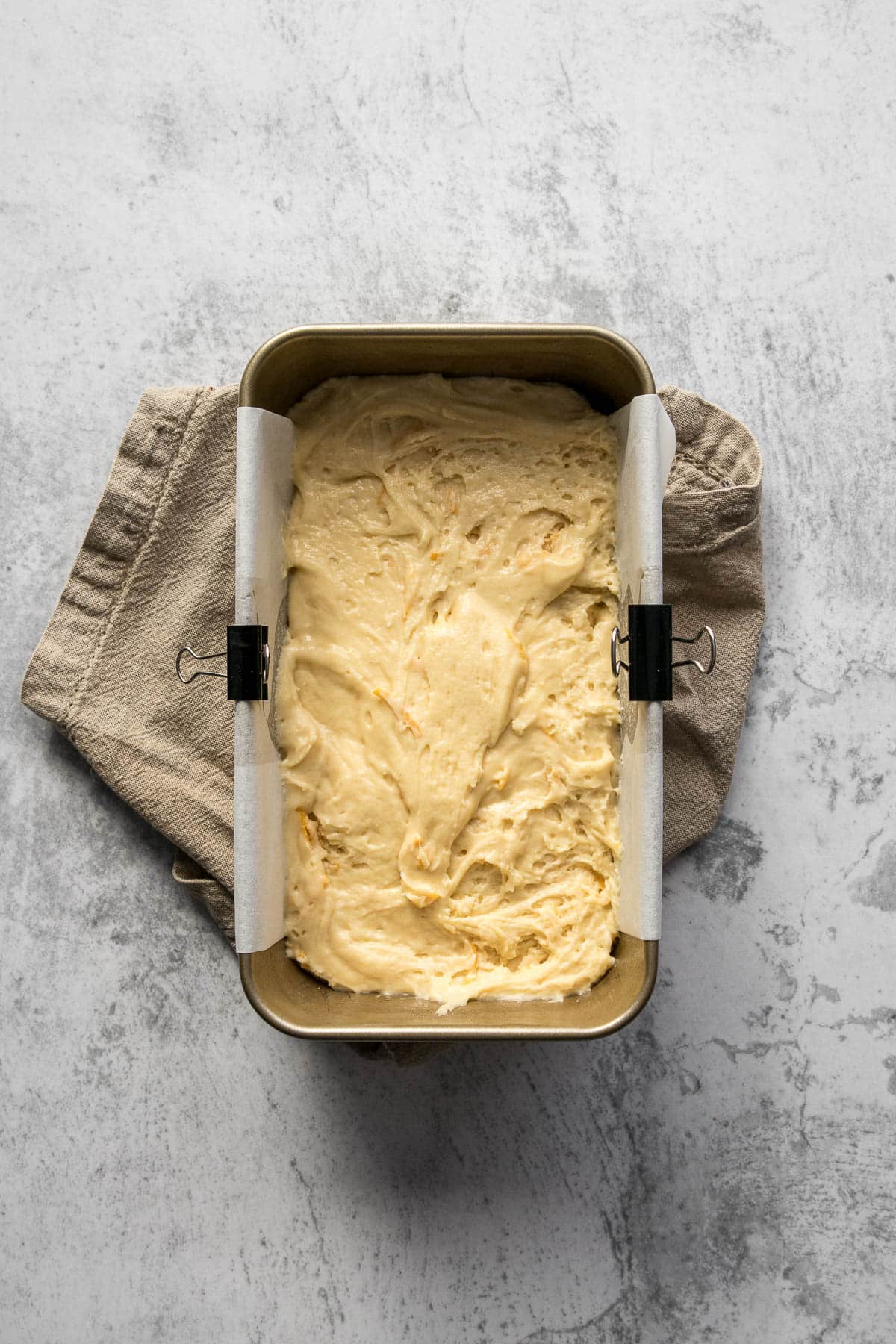
Pour or spoon the cake batter into the prepared loaf tin. Bake for 35 to 45 minutes or just until a cake tester or toothpick comes out mostly clean. Be careful to not overbake the cake.
Step 6 - Orange Drizzle
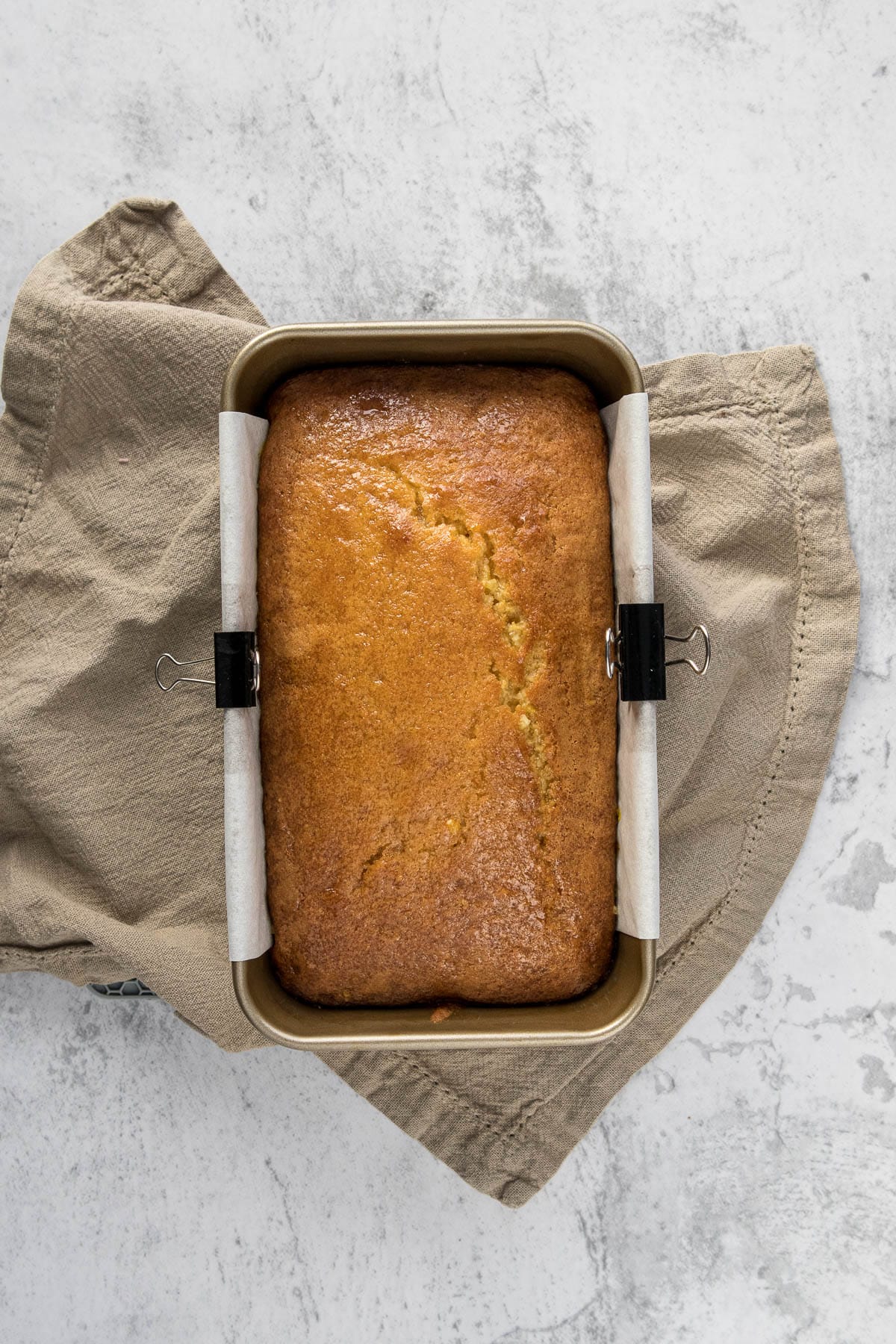
In the last 5 to 10 minutes of baking, place the orange juice and sugar in a heatproof bowl and microwave in 15-second increments, stirring between bursts until the sugar is dissolved. When the cake is finished, slowly spoon the drizzle over it while it is still warm, allowing it to soak in. Let the cake cool completely before serving.
Step 7 - Orange Glaze
This is an optional extra. I like the cake without any glaze, but for a little extra sweetness, you can add a glaze once it is completely cooled.
Combine the icing sugar and orange juice to create a thin icing glaze. Pour over the cooled cake.
TIP - Start with ½ a tablespoon of orange juice, and mix to combine. Add more orange juice a little at a time until you have a pourable but not too-thin glaze.
Step 8 - Storage
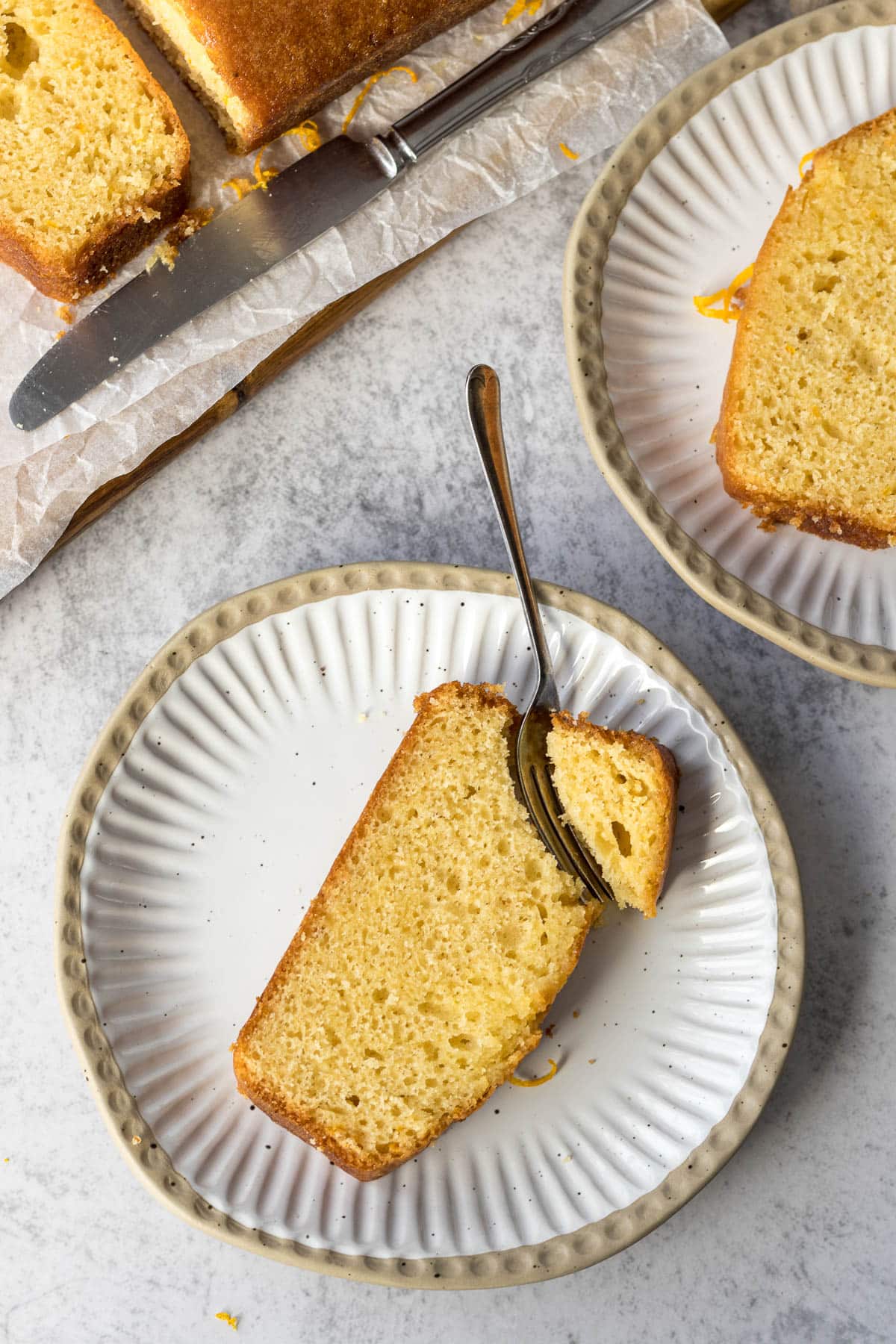
This loaf cake can be stored in an airtight container at room temperature for up to 3 days. After 3 days, store in the fridge for a further 2 days.
Pro Tips for this Recipe
Ovens
The temperatures stated are for conventional ovens. For convection, fan-forced, fan-assisted, or air-fryers, the temperature must be reduced by 20°C/25°F.
For baking, make sure the oven is fully preheated, and that the rack is in the middle of the oven. Open the oven as little as possible. For best baking results use an oven thermometer.
Remember that all ovens work slightly differently and bake times may need to be adjusted for your specific oven.
Bakeware
Metal bakeware is superior when baking biscuits, cookies, brownies, muffins and quick bread, scones, cakes. These heat up and cool down faster than glassware. Glassware is heavier, heats up and cools down slower than metal, and is more suited for bread puddings, pies, crisps, crumbles, and cobblers.
Choosing Oranges
When I'm looking for oranges, I'm generally looking for a locally sourced orange. Once that is nice and plump and has a delightfully orange colour. The more fragrant the orange the better...although that can be hard to determine in these mask-wearing times.
How to Zest an Orange
Zest refers to the thin outer coloured layer of an orange filled with all the flavourful citrus oils.
To obtain the zest, use a Microplane, vegetable peeler, grater or zesting tool to scrape off the outer portion of the orange. Avoid the pith or white part as this is fairly bitter and doesn't add flavour.
How to Juice an Orange
Roll the oranges on a kitchen counter or chopping board with enough pressure to break the segments and pulp the inside of the orange. Then slice them in half and either squeeze the halves into a jug or glass container. Remove any seeds from the fresh orange juice before adding to the cake and drizzle.
Orange Loaf Cake FAQ
Loaf cakes are baked in loaf tins, while regular cakes are typically baked in round tins. They will have similar ingredients and flour-to-fat-to-sugar ratios. Mixing methods will change depending on the cake recipe.
This particular orange drizzle cake consists of flour, baking powder, salt, sugar, milk, eggs, butter, zest and juice from a whole orange.
Rate & Review!
If you made this recipe, please leave a star rating! It gives my readers and me helpful feedback. If you want more recipes, subscribe to my newsletter, and follow me on Instagram, Pinterest, and Facebook!
Recipe Card
Orange Loaf Cake
Equipment
- Loaf Pan (9x5 Inch - 23x13cm)
- Stand Mixer OR
- Electric hand mixer
Ingredients
- 3-4 oranges
- 150 grams white granulated sugar (caster/granulated)
- 2 large eggs (medium/large/size 6)
- 75 grams butter
- 50 mL orange juice (juice of a orange)
- 60 mL milk
- 2 teaspoons vanilla extract
- 220 grams plain flour (all-purpose/standard grade)
- 2½ teaspoons baking powder
- ¼ teaspoon table salt
Orange Drizzle
- 50 grams white granulated sugar (caster/granulated)
- 100 mL orange juice (juice of 2 oranges)
Orange Glaze (Optional Extra)
- 80 grams icing sugar (powdered/confectioner's)
- ½-2 tablespoons orange juice (juice of ½ an orange)
Instructions
- Preheat the oven to 170°C/340F. Grease a loaf tin and set it aside. Melt the butter and allow it to cool a bit. Zest one of the oranges using a zesting tool or Microplane. Juice all of the oranges.3-4 oranges, 75 grams butter
- In a large mixing bowl, beat the eggs and sugar until the mixture is light, fluffy and doubled in size. This will take 3 to 5 minutes using an electric hand mixer or stand mixer.150 grams white granulated sugar, 2 large eggs
- With the mixer running on the lowest setting, pour in the melted butter, vanilla, orange juice and milk. Mix until well combined.75 grams butter, 50 mL orange juice, 60 mL milk, 2 teaspoons vanilla extract
- Either whisk together the flour, baking powder and salt and add to the wet ingredients or sift the ingredients over the wet ingredients. Toss in the zest of one of the oranges. Mix until combined.220 grams plain flour, 2½ teaspoons baking powder, ¼ teaspoon table salt
- Pour or spoon the cake batter into the prepared loaf tin. Bake for 35 to 45 minutes or just until a cake tester or toothpick comes out mostly clean. Be careful to not overbake the cake.
Orange Drizzle
- In the last 5 to 10 minutes of baking, place the orange juice and sugar into a heat-proof bowl and zap in the microwave in 15-second increments, stirring in between until the sugar is dissolved. When the cake is finished, slowly spoon the drizzle over the cake while the cake is warm, allowing it to soak in. Let the cake cool completely before serving.50 grams white granulated sugar, 100 mL orange juice
Orange Glaze (Optional Extra)
- Combine the icing sugar and orange juice to create a thin icing glaze. Pour over the cooled cake.80 grams icing sugar, ½-2 tablespoons orange juice
Notes
Nutrition
Nutrition information is an estimate. If scaling the recipe remember to scale your cook and bakeware accordingly. All temperatures stated are conventional, unless otherwise stated. Recipes tested in grams and at sea level.
Comments
No Comments